The plates of 1921
The ten Rorschach inkblots, card by card
In 1921 the Swiss psychiatrist Hermann Rorschach published ten inkblots in a book called Psychodiagnostik. Five are black and grey, two add red, and three are in full color. Psychologists have shown the same ten cards, in the same order, ever since.
Here are all ten, from the first printing, which is in the public domain. For each: what most people see in it, what Rorschach said of it, what later examiners claimed it revealed, and whether that held up. None of it is a right answer. To try them first, look at each plate and say the first thing you see before you read its notes.
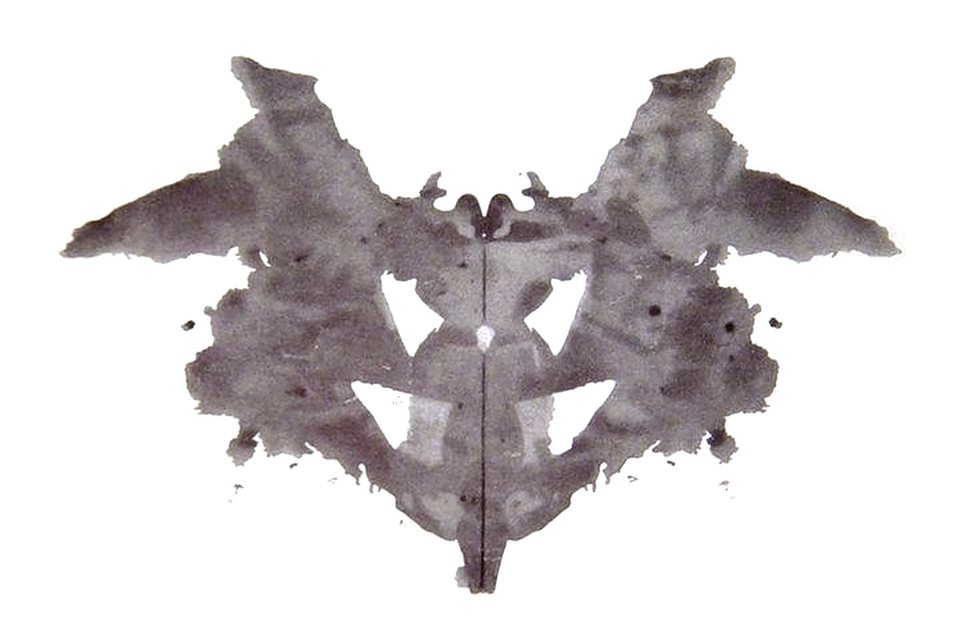
Card IA bat, a butterfly, a mask
Black and grey, compact, with four white gaps.
- What people see
- A bat or a butterfly. In one study of two hundred adults, seven in ten gave one of those or a bird. Many see a mask or an animal’s face.
- What Rorschach said
- He put it first: compact, with rich small details. From across a room, he noted, it reads as a fox’s head.
- What examiners claimed
- Being first, it was said to show how a sitter meets anything new.
- What held up
- Never tested. What has been tested is the mask: cover the four white gaps and the face goes. Shown the outline with its gaps, 21 of 25 people saw a face or a mask.
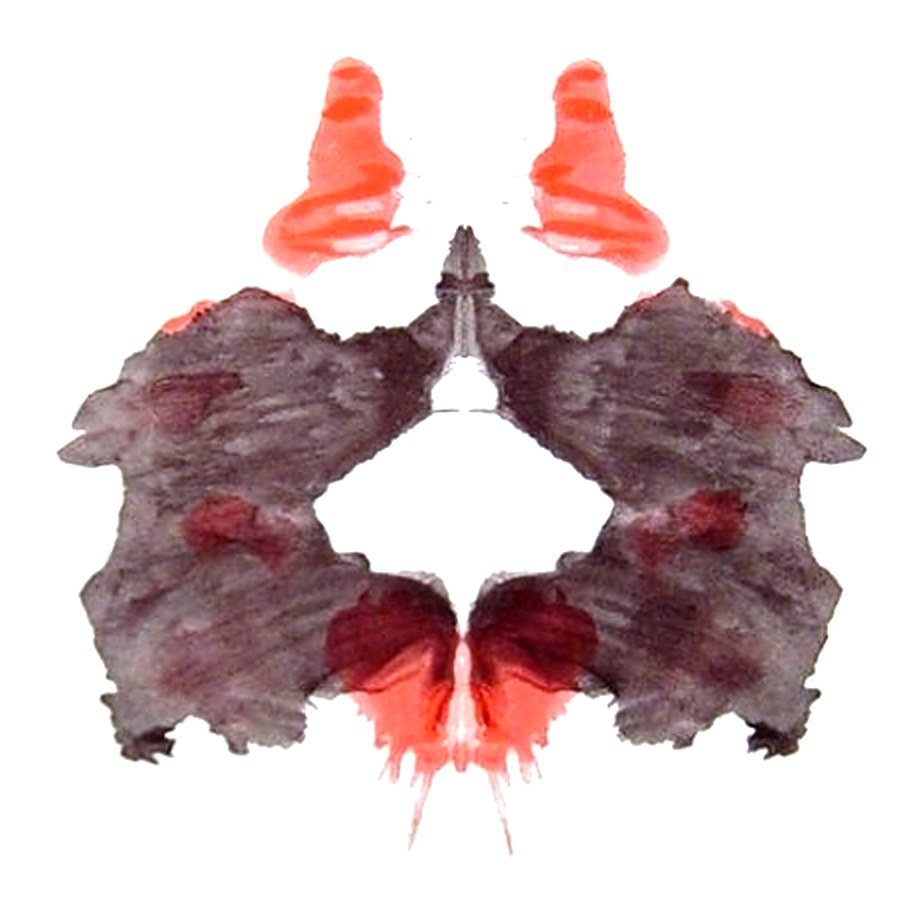
Card IITwo animals, and red
Black, with two red patches above, one below, and a white space at the center.
- What people see
- Two animals, often bears, dogs or elephants, and usually up to something: playing, dancing, fighting. The white center is often a lamp or a rocket.
- What Rorschach said
- The first plate with color: red running into the black, and a prominent white space in the middle.
- What examiners claimed
- The red was read as blood and anger, and a slow or flustered answer here as “color shock”, a sign of nerves.
- What held up
- The shock did not survive testing: grey copies of the colored plates unsettled people just as much. The red does matter, though. Shown the black alone, people still saw two animals, but hardly any said they were fighting.
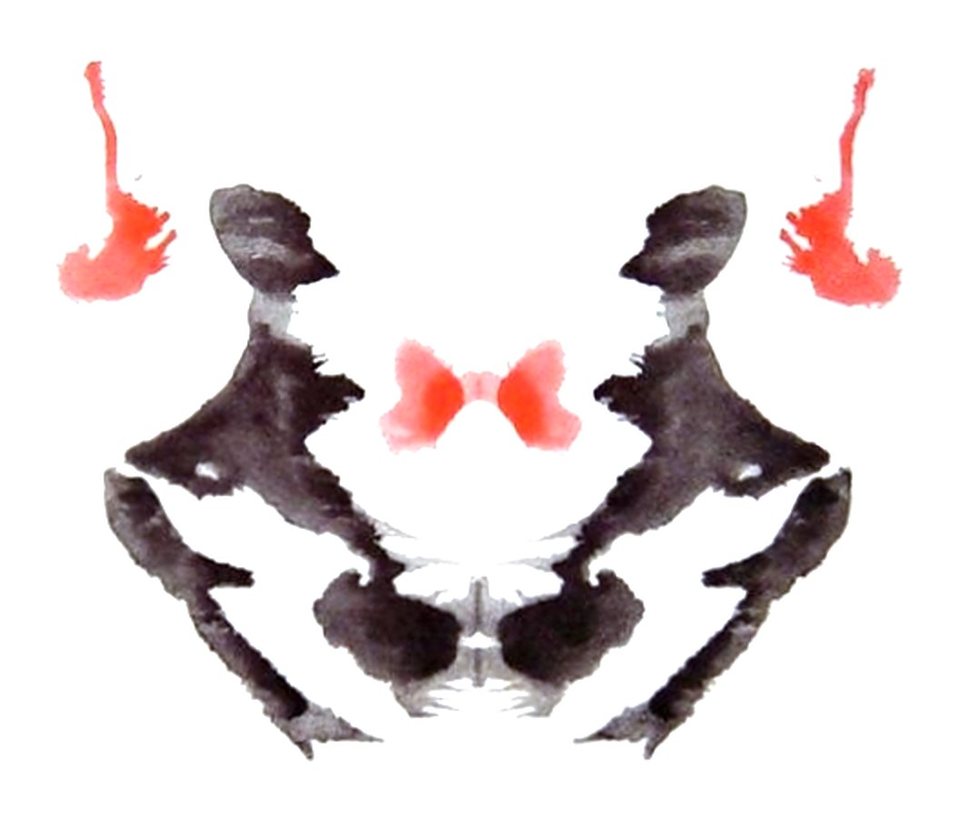
Card IIITwo people
Black, with separate red marks: one at each side and one in the middle.
- What people see
- Two people facing each other, often bending over something: lifting, cooking, drumming. The red in the middle is a bow tie or a butterfly.
- What Rorschach said
- Here the red stands apart from the black. This is where most sitters give the answer he prized above all: people in motion, his mark of “inner creativity”.
- What examiners claimed
- Called the social card: how you see people getting on.
- What held up
- It is one of the few plates people reliably find pleasant. And seeing whole people doing something together is among the better-supported signs in the whole method.
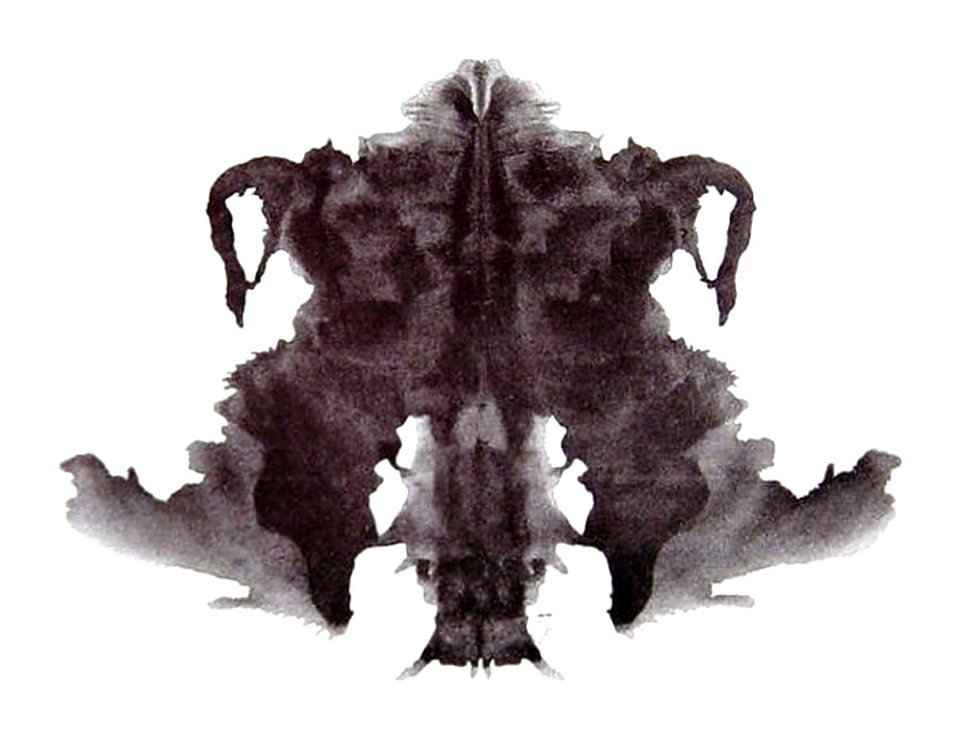
Card IVThe giant
The darkest and heaviest plate: one black mass, thickly shaded, broad at the foot.
- What people see
- A giant, a monster or a great hairy beast seen from below. Or an animal skin.
- What Rorschach said
- His own blots were flat black. The printer turned them into the shades of grey you see here, and Rorschach liked the accident enough to build shading into his method.
- What examiners claimed
- The “father card”: from the 1940s, answers here were read as feelings about authority.
- What held up
- Half true. People do rate this plate strong, heavy and a little menacing, and pick it for “father” more often than chance. Reviewers still concluded it should not be read that way.
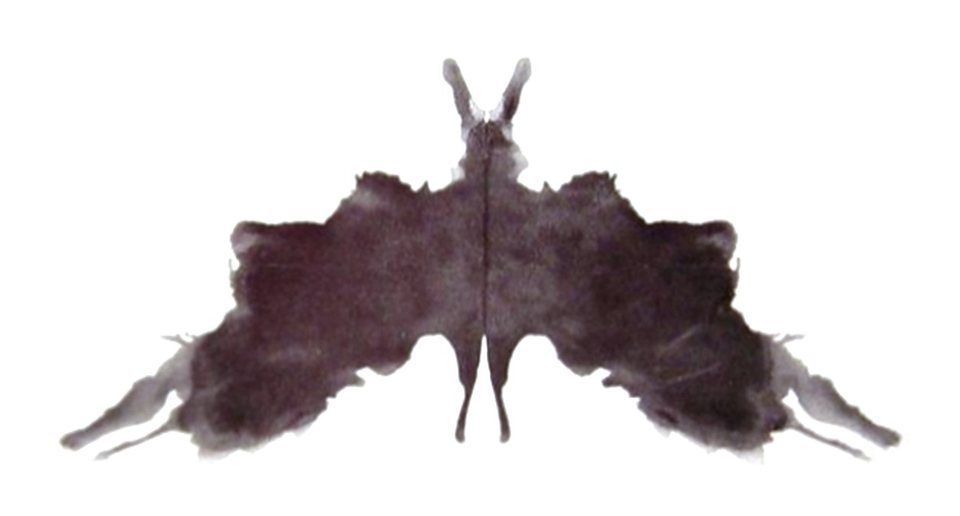
Card VThe bat
Black, compact and wing-shaped.
- What people see
- A bat or a butterfly. About 85 sitters in 100 give one or the other.
- What Rorschach said
- He called it the easiest plate: nearly everyone says a bat or a moth.
- What examiners claimed
- The easy card, a breather after the heavy fourth.
- What held up
- The shape does the work. Tinted pink in one experiment, it drew more butterflies than bats; with its side points trimmed away, butterflies took seven answers in ten.
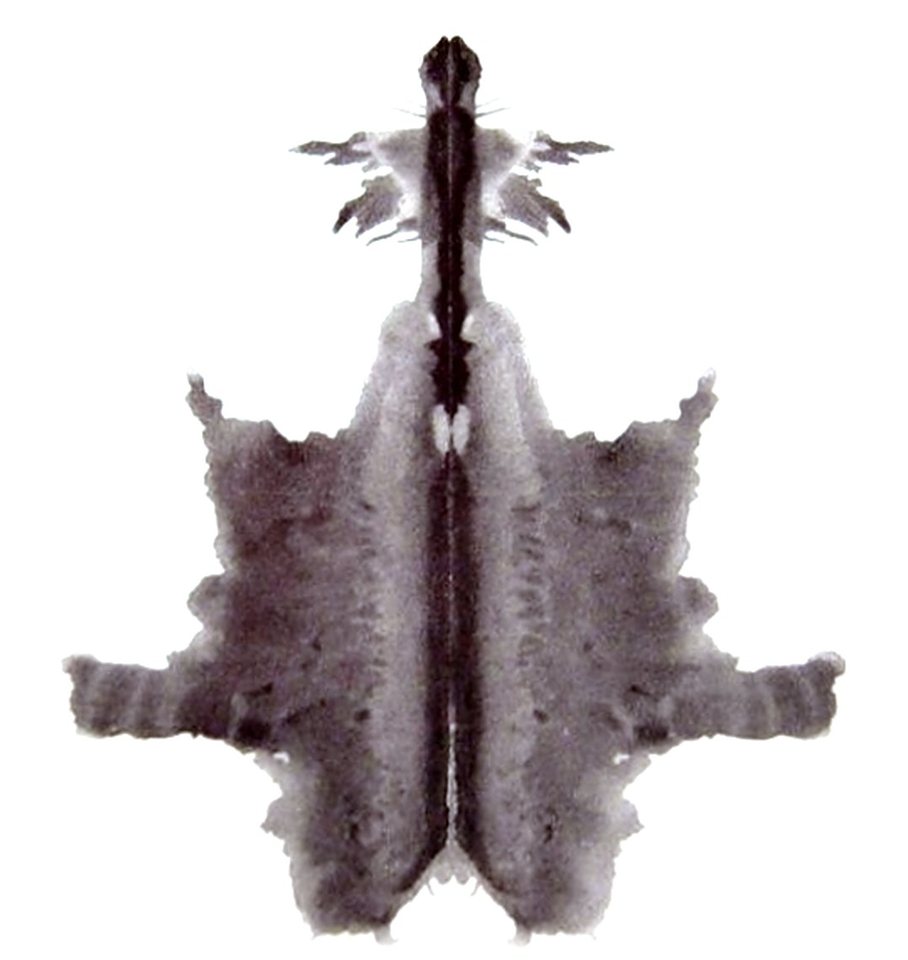
Card VIThe animal skin
Grey, tall and narrow, richly shaded, with a spike at the top.
- What people see
- An animal skin, a hide or a rug, pegged out flat.
- What Rorschach said
- In his last lecture, weeks before he died in 1922, he began to score shading. Answers that use it, like fur and hide, gather on this plate.
- What examiners claimed
- The “sex card”, so named in 1950 for the shapes examiners found in it.
- What held up
- In rating studies it is the plate people find hardest to describe at all. Men rated it the way the nickname suggests; women did not.
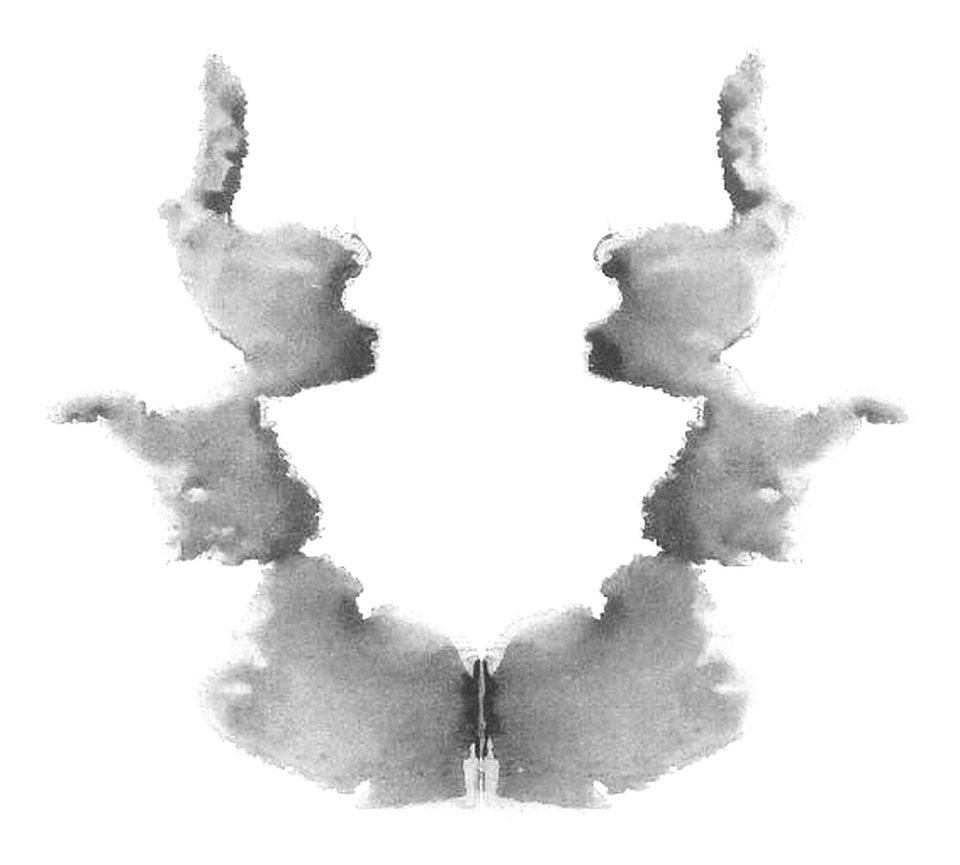
Card VIITwo faces
The lightest plate: pale grey figures around a large white space.
- What people see
- Two faces or heads, often of women or children, looking at each other. Sometimes clouds.
- What Rorschach said
- For this plate, he wrote, the white space in the middle is the key.
- What examiners claimed
- The “mother card”, the gentle counterpart to the fourth.
- What held up
- People do find it gentle and pleasant, nearly the opposite of the fourth plate. But asked which plate stands for “mother”, they pick the colored ones.
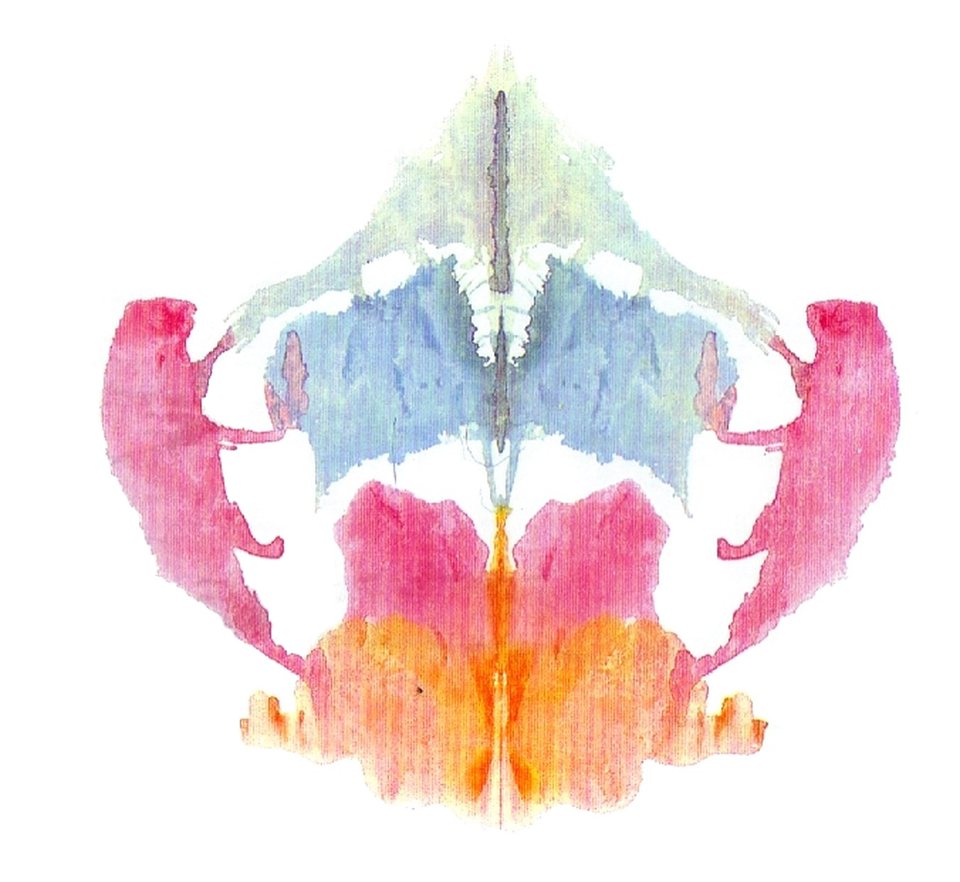
Card VIIITwo animals climbing
The first plate all in color: pink, orange, blue and grey-green.
- What people see
- Two four-legged animals climbing the sides, in pink: bears, rats, lizards, big cats. Eight sitters in ten, in one study.
- What Rorschach said
- He called its colors harmonious.
- What examiners claimed
- The relief card: color at last, after five dark plates. How warmly you answered was read as how openly you feel.
- What held up
- Color does draw a few more answers from adults, about a seventh more on each colored plate, though not from children. The leap from color to feeling did not hold up.
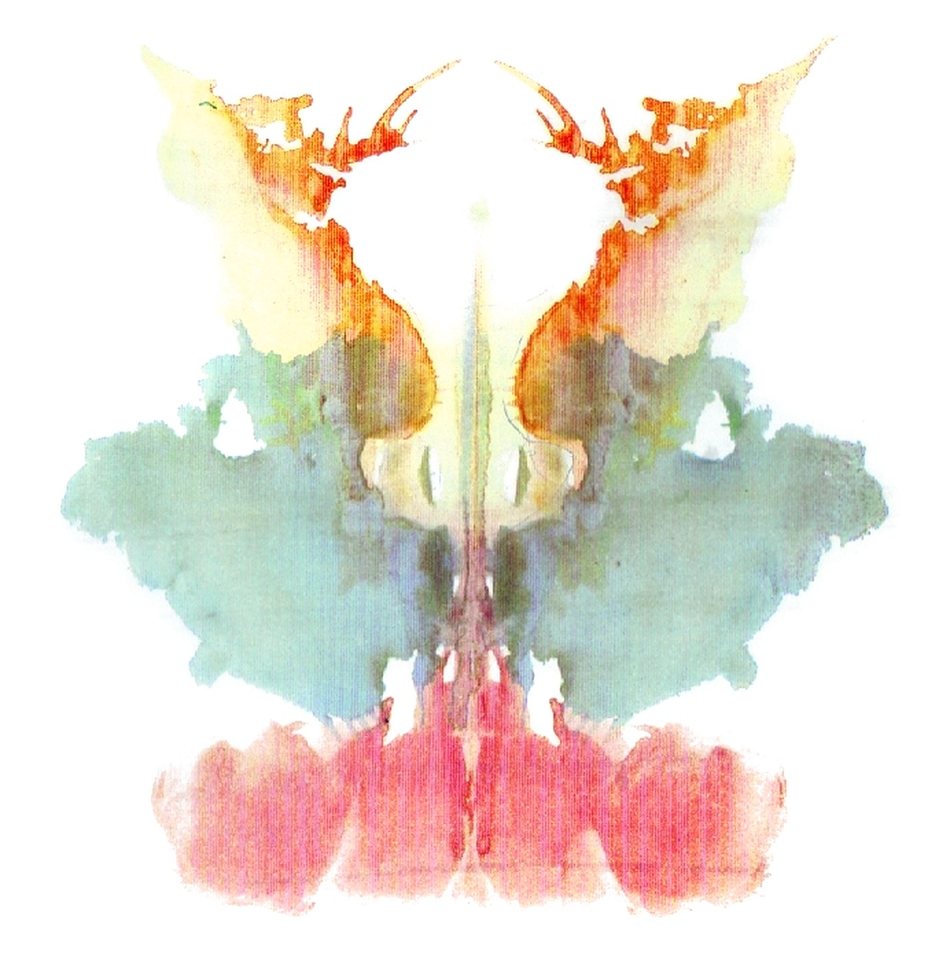
Card IXWitches, fire, a fountain
Soft, blended color with vague edges: orange above, green in the middle, pink below.
- What people see
- Hard to say, which is rather the point. Witches or wizards in the orange; a fountain, a fire, a flower.
- What Rorschach said
- He called its colors discordant.
- What examiners claimed
- The hardest card, said to be the one sitters most often give up on.
- What held up
- It has the fewest popular answers of the ten, so nearly anything you see here is your own.
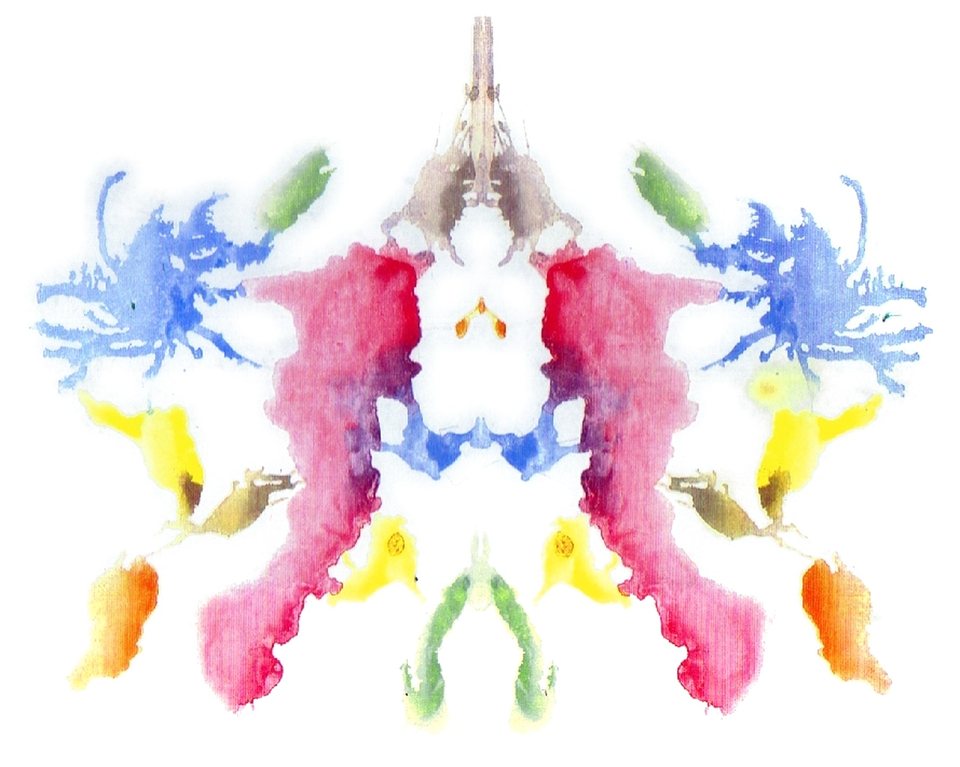
Card XCrabs and spiders
Many colors, in many scattered pieces.
- What people see
- Crabs or spiders in the blue at the sides. Sea creatures, a garden, a scene under water. Often a list of separate things.
- What Rorschach said
- He scattered the blots on purpose, to make a single answer for the whole plate almost impossible.
- What examiners claimed
- The card of “organizing chaos”: whether you can pull the pieces into one picture.
- What held up
- Sitters give more answers here than anywhere, and it was put down to the scattering. Printed in grey, the extra answers vanish. It was the color all along.
Do the cards mean anything?
Less than their nicknames suggest. The fourth card is picked as the “father” a little more often than chance, the seventh is not the one people pick as the “mother”, and reviewers advise against reading either that way. What did hold up is the mood of each blot: the dark, heavy plates read as strong and a little threatening, the pale, open ones as gentle, and the scattered colors as pleasant.
The largest review of the test, a 2013 meta-analysis of 215 samples and some 25,800 people, found that how you see matters more than what you see. Seeing people in motion, pulling the pieces of a blot into one picture, and seeing shapes that fit the ink are among its better-supported scores. Attempts to read feelings from color mostly failed, and the scores barely matched how people describe themselves.
Is the Rorschach test still used?
Yes. Some clinical and forensic psychologists still give it, scored with Exner’s Comprehensive System or its successor, R-PAS. A real assessment is given in person, runs to fifteen to thirty answers with questions afterward about where and why, and is scored against norms.
Can you take it online?
Not the real thing. An app or a website, Inkblotter included, can show you the plates and tell you what other people saw, but one answer to each card is a tenth of a real record, and no one can score it for you over the internet. Treat any result as a parlor game.
Where do these images come from?
They are scans of the 1921 printing from Wikimedia Commons, in the public domain in the United States and Switzerland. The card’s tint is taken out so the ink sits on this page. Rorschach’s own blots were flat black: the shading came from his printer, and he liked it enough to build it into his method.
In Inkblotter
Sit the ten plates on your iPhone
Inkblotter shows the plates one at a time. Say the first thing you see, then turn the page for what most people saw and how Rorschach would have marked your answer. After the tenth comes a scoring sheet tallied his way. Then make a blot of your own: drop ink on a page and close your iPhone Duo to press it.
Sources
- Rorschach, H. (1921). Psychodiagnostik. Bern: Bircher.
- Exner, J. E. (1996). Critical bits and the Rorschach response process. Journal of Personality Assessment, 67, 464–477.
- Frank, G. (1977, 1978). On the validity of hypotheses derived from the Rorschach, parts II and IV. Perceptual and Motor Skills, 45, 991–998; 47, 179–184.
- Liaboe, G. P., & Guy, J. D. (1985). The Rorschach “father” and “mother” cards: An evaluation of the research. Journal of Personality Assessment, 49, 2–5.
- Mihura, J. L., Meyer, G. J., Dumitrascu, N., & Bombel, G. (2013). The validity of individual Rorschach variables. Psychological Bulletin, 139, 548–605.
- Silva, D. R. (2002). The effect of colour on productivity of Card X of the Rorschach. Rorschachiana.
- Searls, D. (2017). The Inkblots: Hermann Rorschach, His Iconic Test, and the Power of Seeing. Crown.